Sunday, March 20, 2011

People and Colors of Colombia

Colombia is a colorful country full of interesting people. We couldn't get over how the people were so, well, Colombian.


The men in Eje Cafetero look exactly like Juan Valdez, the famous Colombian Coffee icon. They sport ponchos, hats, and mustaches, the works. Check out this guy behind Randy in Salento. See!

Women wear ponchos too and it seems to make a lot of sense for the climate, which is generally moderate but can get chilly at night.

Mr. and Mrs. Guzman

We met the Guzmans on top of a mountain, where they run a little low key restaurant and crash pad for hikers. They served us hot chocolate and cheese and let us photograph them in their kitchen, which was straight out of an 1800s re-enactment.

The people come across as very industrious and hard-working. They seem to work very hard for what they have and they're proud of it. They are also kind, helpful, and courteous, not to mention very amused at our use of Spanish.

Julio, our coffee tour guide.

We spent a few hours with Julio, who gave us a tour of the coffee plantation he works at. Since no one else showed up, we got our own private tour. He shared, in Spanish, his vast knowledge of coffee beans and the manufacturing process.


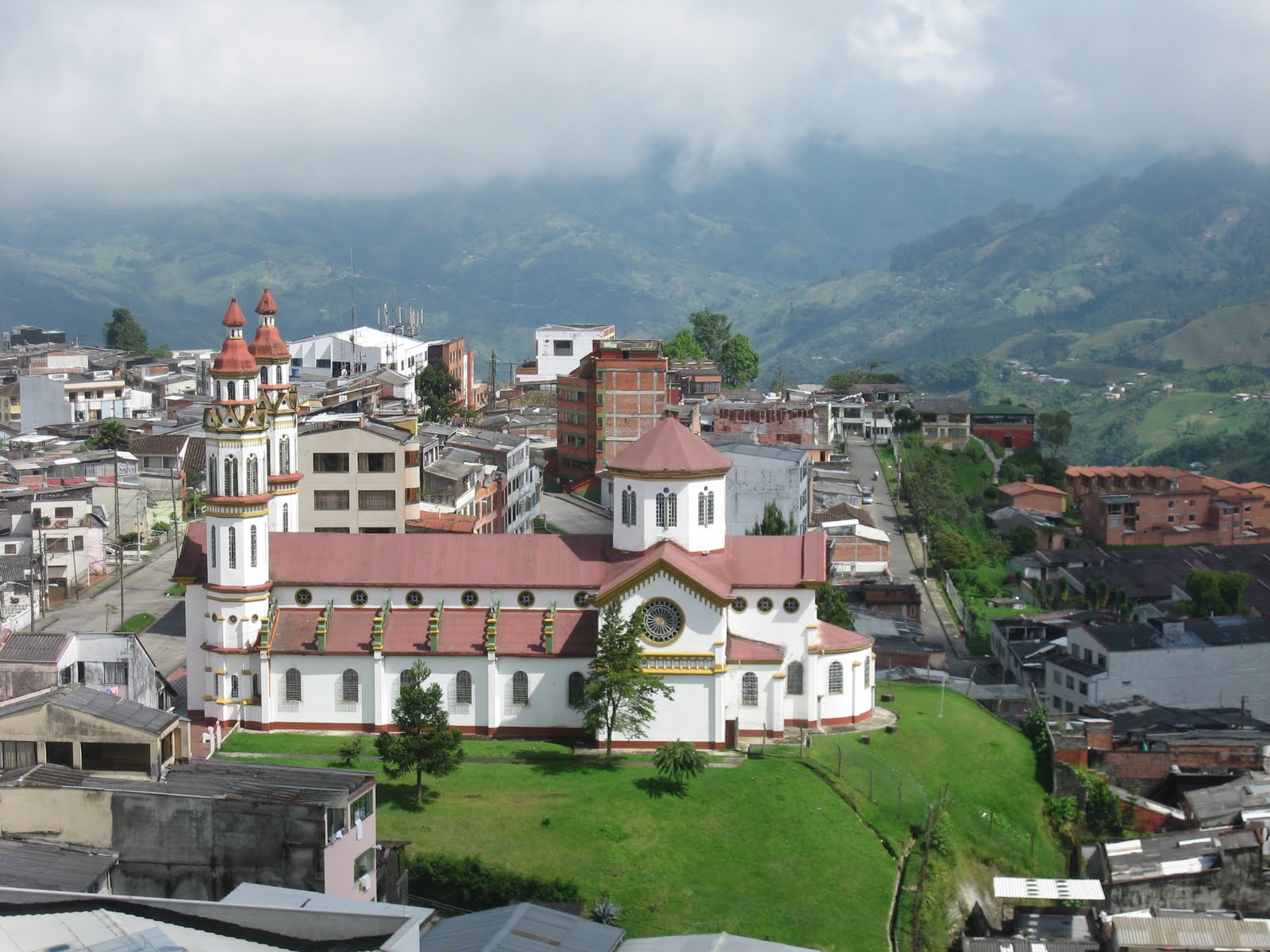
Colombia is greener than green. Go to the countryside and you'll feel like you're looking at everything through green tinted glasses. And in the cities, it seems the people can't get enough color. The buildings are simple, but what they lack in fancy architectural details, they make up for with paint.

This is the style of a typical building - lots of bright paint!

Tuesday, January 11, 2011

Bogota in a Day


We have to admit, our expectations for Bogota were lower than low. It's a massive sprawling city located on a continent that's not exactly known for having beautiful capital cities. Not to mention that Bogota's distinction as being one of the most violent cities in the world hasn't done it any favors.

For these and other reasons, we left one mere day to explore Bogota, and we probably would have allowed less time than that if it wasn't for our flight not leaving until midnight.

Bogota was nice enough to treat us to a fireworks show.

But Bogota surprised us. It's true that there are more bad parts than good parts of the city, but we found the good parts rather charming and the people exceedingly kind. Twice in our short visit we were stopped by well-meaning Colombianos who politely informed us that we were about to walk into a troubled area and we should turn around.

So it's not a city for mindless wandering, where you can lose yourself meandering on narrow streets. It's better to have a map in your hand and know your boundaries. It's good to know the people who live there watch out for each other and their tourists.

Even on a cloudy day, Bogota is colorful.

The cute historical neighborhood of La Candelaria is full of colorful buildings and reasonably safe streets. Nearly every tourist who's visiting the city can be found there.

La Candelaria

If you ever come to Bogota, don't pass up the Botero Museum. Botero is one of Colombia's most famous artists and has the distinctive style of painting everything "chubby," from people to fruit. The museum has a decent Picasso selection as well, and it's completely free (take that New York!). It's much more entertaining than the more famous Gold Museum, in our opinion.

A Botero classic.

Wednesday, December 15, 2010

Comida de Colombia

In Colombia, the food is simple, cheap, and delicious. Colombians eat a lot of rice, beans, soups, and corn-based foods. They have tons of fruit, including some that we've never heard of because they're unique to that part of the world.

El Plato del Dia

Typical Plate of the Day

Most restaurants have a "Plate of the Day" for lunch and dinner that includes soup, a meat, beans, rice, a small salad, a fried plantain, an arepa, and a glass of juice. All for about $4 or less.

Chocolate and Cheese

Have a hunk of cheese with your hot chocolate.

Colombians love their chocolate and cheese. Together. We didn't believe it either until we saw it. They cut up the cheese and drop it into the hot chocolate. Sounds strange, but it is popular for breakfast or a snack.

Arepa

Arepa con Queso

Arepas are everywhere in Colombia. They can be made of either yellow or white corn. They often have no filling but we preferred them with hot gooey cheese in the middle. They generally come with a meal, sort of like a dinner roll, but they are popular for breakfast as well. We discovered the arepa at the beginning of day one and it became one of our staples for the entire trip.

Fruit and Juices

Plantain soup and papaya juice.

Colombia grows a lot of delicious fruit and they are able to grow it all year round because of the favorable climate. They have some interesting fruits we had never heard of, like the lulo, a tart fruit that looks like an orange on the outside but is green on the inside. Juices are very popular and we had tasty blackberry, papaya, tomato, and strawberry juices. All very fresh and with no sugar added!

Coffee

Coffee Plant

A lot of coffee is grown in Colombia and since we spent most of our time in Eje Cafetero, the coffee region, we certainly drank our share of it. We toured a coffee plantation in Salento and learned about the different types of coffee and the coffee making process.

Saturday, December 4, 2010

In and Around Manizales

Thermal Springs of Santa Rosa de Cabal

On our way to Manizales from Salento we stopped at the Termales de Santa Rosa. The hot pools are set amid lush green scenery at the base of three waterfalls. We relaxed in the hot water for a while and took a short hiking trail up over the springs to get a better view of the big waterfall.


Thermal pools and the crashing waterfall above.


Swiss chalet style hotel built around the thermal springs.

We took a chiva back to Santa Rosa. A chiva is a colorful bus characteristic of Colombia and Equador and has become a symbol of Colombian culture. The roof is used to carry bags, fruit, and whatever else people might be transporting. We were the first ones on but by the time we go to town, it was packed with people.


Manizales

Manizales is a college town and one of the larger cities of the coffee region. It is built on a ridge. The main thoroughfare of the city runs along the top of the ridge and the cross streets slope down sharply on either side of the main street. Like everything else in this part of the country, it is surrounded by green hills.

Backroads of Manizales


View from an overlook.


Hilly farmland outside of Manizales.

Sunday, November 28, 2010

Salento and the Valle de Cocora

The Eje Cafetero (Coffee Axle) is the central Andean region of Colombia that produces the majority of the country's coffee. It is lush area full of green hills that look so, well, Colombian. We chose this area as the major destination for our trip because we had read so much about the region's natural beauty.

View from the bus while speeding over the Andes Mountains from Bogota.

Salento


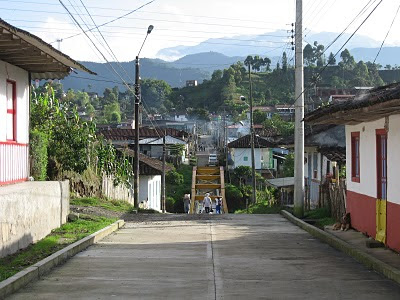
Salento, the tiny but adorable town we stayed in for a few days, is a real gem. The people are kind and the streets are safe enough for kids to roam around after dark. Buses take people to the bigger cities of Armenia and Pereira but the best way to get around town is by jeep (basically the town's taxi system) or motorcycle. Farms, mountains, and lush landscape surround the town on all sides.

Valle de Cocora

Valle de Cocora and the classic wax palms.

The Valle de Cocora is is a valley located just a short drive from Salento. This picturesque landscape is full of wax palms, the tall skinny palm trees that are the national tree of Colombia. We arrived in the town square for our 7:30 a.m. departure and loaded up into several jeeps with other travelers for the ride out to the valley. It rains regularly here and the ground was extremely muddy.

Normally we enjoy hiking on foot, but we decided to try horseback riding for half of the hiking loop. We had a guide (who was interestingly on foot rather than on a horse). He walked behind us the whole time, making whistling and clicking noises the whole time that somehow guided the horses.

Randy the Horseman

The horses were good sports, crossing rivers and ascending steep mountain trails. Randy's horse got stuck in the knee-deep mud and nearly bucked him off when he tried to get out. A nearby Australian tourist commented on Randy's impressive horsemanship.

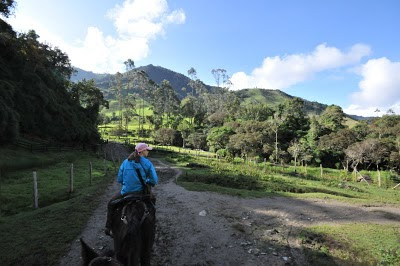

The Quindo River runs through the valley. The beautiful valley has farms on either side where cows graze. As the trail went up into the mountain, the landscape changed into a dense forest. At the top, we entered a nature reserve where an older couple runs a little camp and serves snacks to hikers. Once we got really high up, we were in the clouds.

The "cloud forest" needs no further explanation.

The area has wonderful trout. We had one of our best meals of the whole trip at Rincon de Lucy. It was delicious and marvelously cheap. The meal included soup, a banana, locally grown trout, rice, beans, vegetables, and blackberry juice.

All this food for two for just $6!

Wednesday, October 20, 2010

Rainy Switzerland

Lucerne from above.

Andrea has a long history of crashing her parents anniversary. In fact, she was born on their second anniversary! So it was only fitting that we would join them for one weekend of their two-week 30th Anniversary trip to Europe.

We joined the 'rents in Zurich and followed them to Lucerne, spending one night in each city. Despite the fact that it rained a good portion of the time, we had a really fun time!

Nothing fills a tummy like Germany food!

The creepy thing about Switzerland is that everything is perfect. Well, okay not the weather. And the prices are a bit high. But everything else - the perfectly painted houses sitting perfectly on the hillsides, the chocolates in perfect shapes that melt in your mouth, the swans swimming perfectly into your pictures, and you get the point. It really is like the best parts of Heidi and The Sound of Music, all rolled into one.

The Swiss bring chocolate truffles to a whole new level.


The attractive riverfront of Lucerne.

Expensive, yes. Rainy, yes. But if you can get past a few rainy days rainy days a year, okay make that more like 100, Switzerland is a really dreamy place with storybook scenery, quality restaurants, and really great window shopping.

Wednesday, September 15, 2010

The Great Unknown in Our Own Backyard

When we moved to Queens three years ago, we though we were moving to Long Island. It's a simple mistake that any person holding a map can make.

But any New Yorker or Long Islander can tell you that Queens, although geographically located on an island called Long Island, is really a world away from that which is referred to as "Long Island". There is no official border crossing between the two and no passport is necessary. Even so, people are pretty good about sticking to their respective sides and few see reason to cross the invisible barrier. Legend has it that some people live their whole lives in either Queens or Long Island without ever stepping foot inside the other.

All this helps explain why taking a day trip to Long Island, the other side of the very island we live on, was a journey into the great unknown.

So we probably would have continued to live our Queenly existence without giving one thought as to what lies on the other side of the Cross Island Parkway if it weren't for a few good friends who decided to treat us to a cultural experience. We were quickly lured in by promises of trees, open land, and houses with their own yards.

Our friends don't mess around. They drove us clear across Long Island and all the way to the North Fork, a scenic area with beaches and wineries. At 118 miles from one side to the other, the island certainly lives up to it's name.

Inside our first winery - ever!

We're more familiar with apple-picking than grape-squashing. But we very much enjoyed a pleasant and relaxing afternoon visiting three vineyards.

Attractive wine display at Pindar Vineyards.

At Shinn Vineyards, Scott kindly lent his wine glass as a model for Randy's photography shoot. It sparkled in the late afternoon sun like a diamond engagement ring!


The last stop of the day was the city of Greenport. This charming coastal town has a lovely marina, adorable shops, and seafood restaurants. It felt like vacation (even if it only lasted for a few hours).

You think we can afford one of these boats if we all pitch in?

Besides seeing the beautiful vineyards, we picked up on all kinds of new vocabulary, like "North Shore" and "Robert Moses" as well as hard to pronounce words like "Cutchogue". Without this fun day trip, we never would have known how the North Fork was different from the South Fork, or that the island even forked at all for that matter.


Thanks to our good friends the Bowdens (left) and the Risingers (real life Long Island natives!!) for a fun, educational, and culturally rich experience.